Safe Water Brings New Hope to Families in Zambia
At CMMB, we know that clean, safe water grows healthy communities. That is why we support and advocate for water, sanitation, and hygiene (WASH) initiatives in places like Zambia, where 60% of the most vulnerable households lack access to a basic water service. IN August, experts from around the globe convene for World Water Week in Stockholm, Sweden, seeking solutions for urgent water challenges. Together, our global community will amplify the call for safe water for all while sharing stories of progress and impact.
During World Water Week, we invite you to learn about our progress in Zambia—and to meet some of the people whose lives our work has touched.
Bringing Clean, Safe Water to Rural Communities in Zambia
In Mwandi District, a remote region of Western Zambia, the search for water is a constant struggle. Water does not appear at the turn of a faucet. Instead, families often walk great distances to reach shallow, open wells. Women and children do the hard, time-consuming labor of fetching the water needed to survive each day, leaving little time for work and education. But the water they collect is salty and often brown, increasing the risk of diarrhea and waterborne diseases.
It’s not just households that lack easy and reliable access to water. Health facilities and schools strain to maintain water access, too. At health posts, health workers do their best to prevent infection, but without water to wash their hands and sanitize equipment, it can be futile. At schools, students learn in environments that lack basic water and sanitation access.
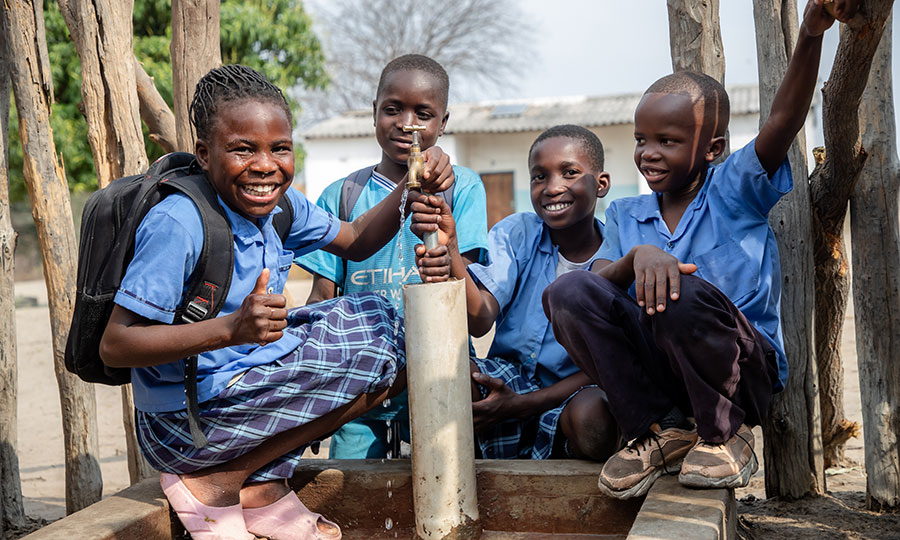
Our Children and Mother’s Partnerships Program, CHAMPS, brings clean water solutions to Mwandi. Access to Health Zambia, a member of the CMMB Global Community, recently drilled two new boreholes, deep wells to access clean water, and repaired two existing ones. This enhanced water infrastructure expands clean water access to more than 1,800 people across Kalundu, Lwazamba, and Loanja, as well as to a school and a primary healthcare unit.
We also installed a 32,000-liter rainwater harvesting system at Magumwi Rural Health Post, a facility that supports 240 safe deliveries a year and 80 outpatient visits a week. Now, the staff can collect, process, and store rainwater during Zambia’s rainy season. With clean, safe water available year-round, health workers feel more confident in the patient care they deliver.
In the Loanja Community
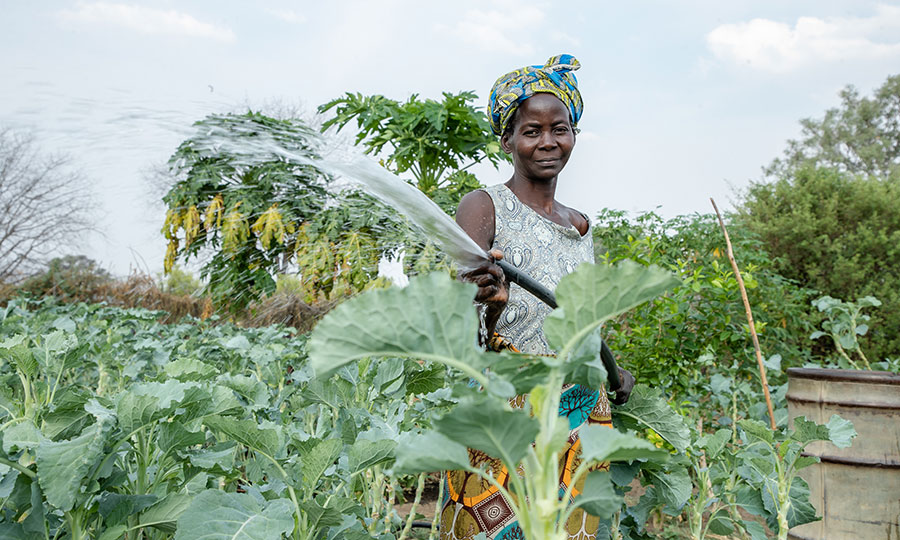
Manga uses the new borehole to keep her garden watered, feeding her family and providing income.
Loanja village relied on a borehole for clean water. But the system was unreliable. “The old borehole where we used to draw water from used to break down almost every week,” said Manga, 55, and a mother of four. “We never knew when we would have water.”
When the borehole was broken, Manga had no choice but to fetch water from a nearby shallow well. But that was risky. The contaminated water gave her and her neighbors frequent bouts of diarrhea. Children suffered the most.
“My heart broke every time I saw the little ones sick because of the dirty water,” Manga said.
But life is different now. With a reliable borehole installed by CMMB, Manga and her neighbors know that clean water is available every day. Families no longer risk their health by drinking water from an unsafe well. And now that water is not so scarce, Manga can do something she never could before: plant a vegetable garden.
Nourished by her frequent watering, her garden yields vegetables that she sells in her village and nearby communities. Her vegetable business provides her with an income so she can support her children’s education. It’s a long journey from the way life used to be.
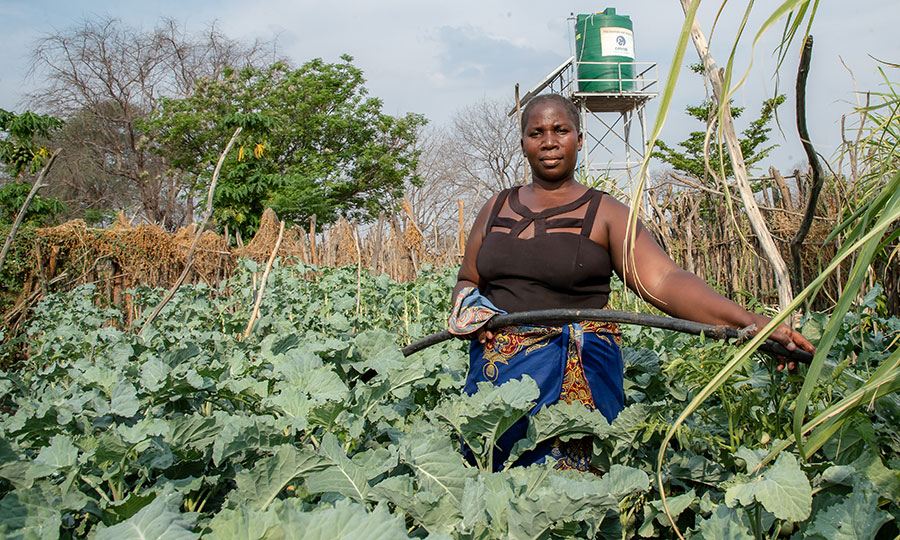
Chuma, another mother in Loanja village, who has built a sustainable source of nourishment and income for her family through her garden.
The same can be said for Chuma, another mother in Manga’s community. Chuma also uses the new water source to nurture a garden, feed her family, and provide for her children’s future.
“We have seen firsthand the importance of water in a household and community,“ Manga shared. “My prayer is that they continue helping other communities who still do not have access to clean water.”
Mutafela, a leader in the Loanja village, has witnessed the borehole’s impact community-wide. As more families create businesses selling produce from their vegetable gardens, rising incomes make life more comfortable.
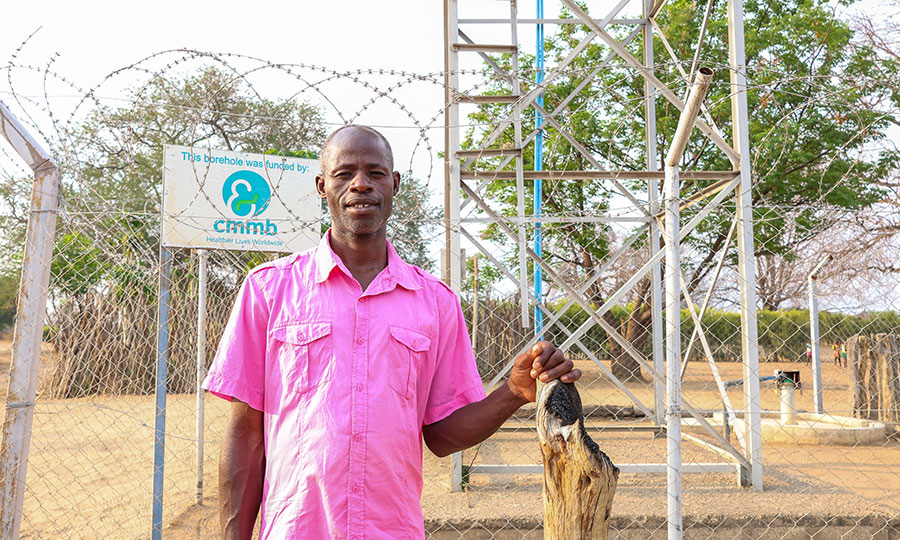
Mutafela, a community leader in Loanja, has witnessed first-hand how the new water source has transformed the health and well-being of his neighbors.
Mutafela is determined to protect this resource to safeguard his community’s future. Today, the borehole has established hours of operation to prevent it from breaking down from overuse. And, each household is required to pay a maintenance fee. With the funds they collect, the community plans to repair the old borehole, adding to their water infrastructure. One reliable water source springs hope for a sustainable future.
In the Sankolanga Community
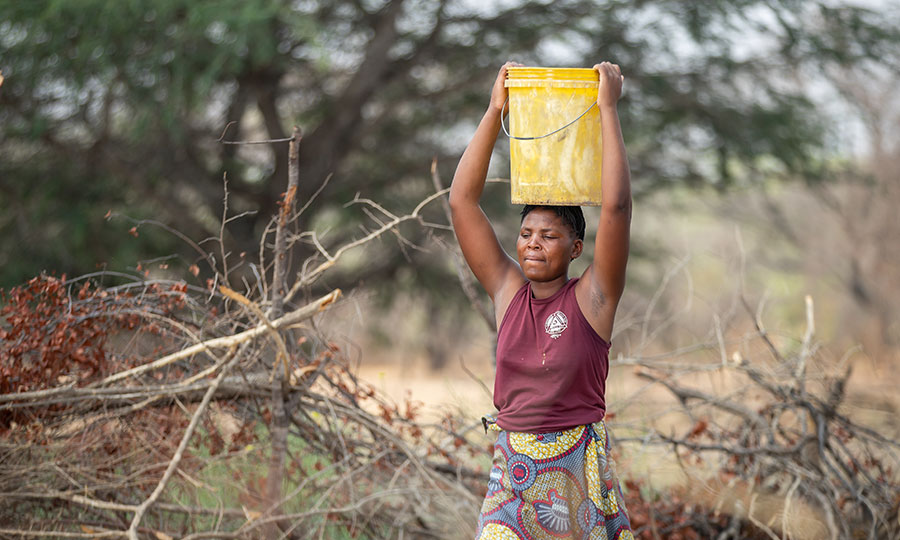
Dinah uses P&G Purifier of Water (POW) sachets to make the water she collects from a shallow well safe to drink.
In Dinah’s remote community of Sankalonga, clean, safe water isn’t close by. Instead, she walks nearly three miles each way to draw water from a well her family owns in a wetland area. Dinah covers the opening with tree cuttings, so animals do not drink the water and contaminate it. Each day, she collects four buckets of brown water and carries it home.
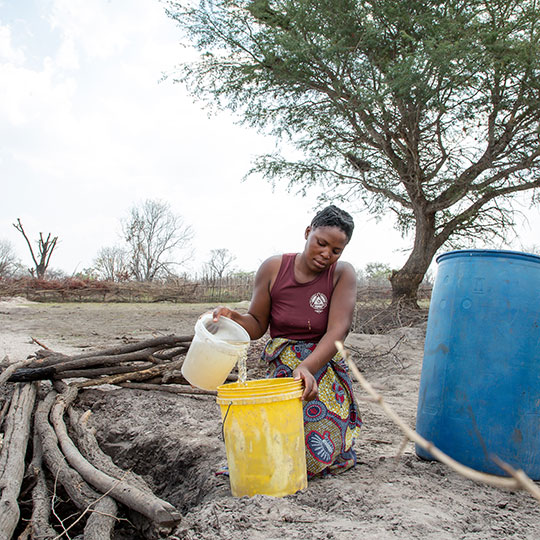
Thanks to CMMB, Dinah knows that she can make the water safe to drink. We provide her with P&G Purifier of Water (POW) sachets, a technology that purifies 10 liters of water in just 30 minutes. In the most challenging circumstances, Dinah keeps her family healthy.
CMMB Continues to Advocate for Clean Water Progress
At CMMB, we are proud of the water solutions we’ve delivered in Zambia. When families have reliable access to clean, safe water, life changes. They can stay healthy, find new ways to support their families financially, and devote more time to their education and livelihoods.
But more than two billion people around the world still struggle to access safely managed drinking water. Climate change only adds to this persistent challenge. When our global community comes together for World Water Week later this month, we will join the call for greater investment in solutions that bring water closer to home.