Bringing Safe Water to Kenya’s Driest Places
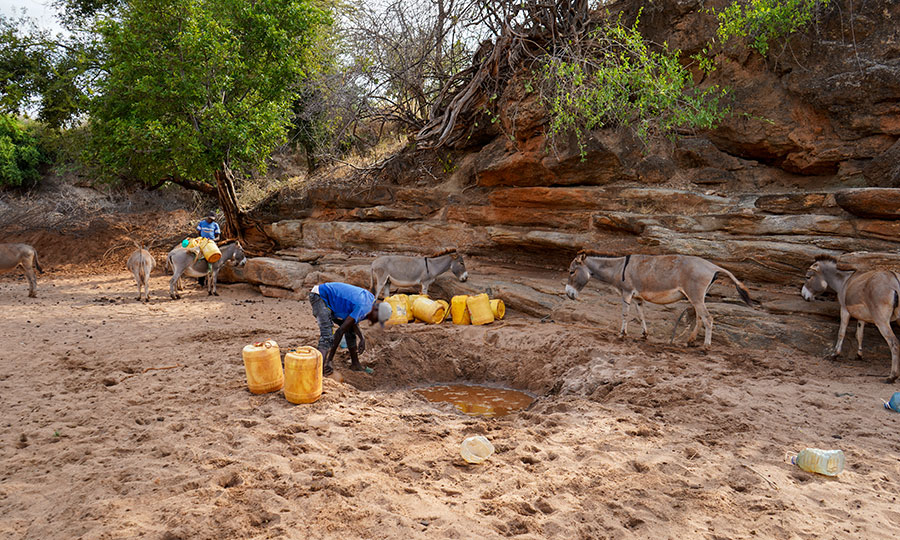
In drought-prone Kenya, just 59% of the country’s 57 million people have access to clean, safe drinking water. As climate change extends the dry season, women and girls forgo work and school to find the water their families need for survival. They walk for miles to reach shallow wells, sacrificing their tomorrows to survive their today. Even then, the water they find is not always safe, and too many in Kenya suffer from potentially fatal water-related illnesses like severe diarrhea.
But progress is happening. Just last year, CMMB connected more than 600,000 people around the world with safe, reliable water. In Kenya, our investments in sustainable water infrastructure and emergency water response provide more families with pathways to health. During World Water Week, we are proud to share the impact of this work.
Connecting Remote Kenyan Communities with Safe Water
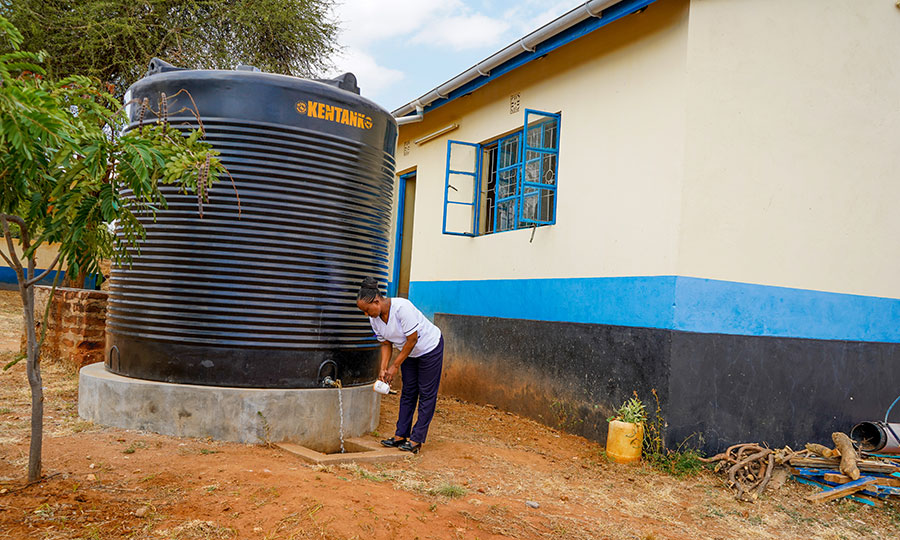
CMMB is bringing change to Kenya by installing new water, sanitation, and hygiene services (WASH) infrastructure, like rainwater harvesting systems and handwashing stations. For the communities we reach, our investment saves lives.
In Central Kitui, a remote area of Kenya where families struggle with poverty and most homes and health facilities lack running water, we recently installed three 10,000-liter water tanks at two health facilities serving more than 9,000 people . So does Miambani Health Center, where the medical team is finally equipped with this lifesaving resource. Thanks to CMMB, the health center’s water-related operational costs have decreased by 86%, freeing up more resources to advance patient care. Another rainwater harvesting system, installed at Katse Health Centre, supports safer childbirth in the county’s Mwingi North region.
We are committed to spreading relief to more water-stressed communities. CMMB has installed 90% of the 12-mile Ithoi-Kyuso pipeline, infrastructure that will expand water access to new villages. The initiative follows our original pipeline project in 2023, when CMMB installed a subsurface sand dam, an innovative solution to keep water flowing even through drought. We connected the dam to a sump well with a solar-powered pump and built 18 miles of pipeline. Now, more than 9,000 people have access to clean, safe water, including the Kisayani Maternity Center.
Our response to water scarcity in Kenya also includes distributing P&G Purifier of Water (POW) sachets that make potentially contaminated water safe for drinking. With the sachets, families without ready access to clean water can use a bucket, a stick or spoon for stirring, and a clean cotton cloth for a filter to purify 10 liters of water in 30 minutes. We train community health workers in Kitui and Kisumu Counties to show families how to use the POWs. In a place where children must bring their own, often untreated water, to school, the impact on health is immediate.
From Thirst to Trust: How Water Transformed a Health Center—and a Community
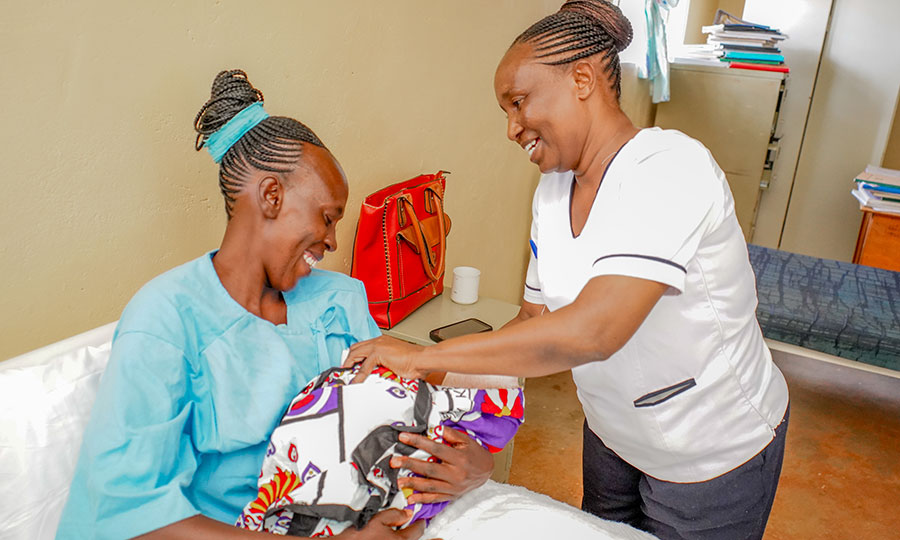
For mothers arriving at Katse Health Centre to give birth, the first challenge wasn’t labor—it was water.
In drought-prone Mwingi North, expectant mothers were sometimes asked to bring containers of water from home before they could be admitted. Nurses struggled to maintain hygiene during deliveries. Bed linens went unwashed. Infection prevention was a daily battle. In one of Kenya’s driest regions, water had become as critical as medicine.
Then, everything changed.
Through CMMB’s Children and Mothers Partnerships (CHAMPS) program, in partnership with the Kitui County government, six rainwater harvesting systems were installed at the facility, half by CMMB and half by the government as a co-investment. The impact was immediate—and life-changing.
Today, harvested rainwater supports handwashing, maternity services, meal preparation for new mothers, and routine sanitation. The facility is clean, dignified, and safe.
“Our mothers are happy,” says nurse Irene Kamula. “They can bathe whenever they need to, wash their clothes, and we prepare meals for them using clean water. The unpleasant smells that came with inadequate cleaning are no longer there.”
For healthcare workers, reliable water has strengthened infection prevention and control and boosted morale. Staff now perform their duties with confidence, knowing they can protect mothers and newborns from preventable infections.
The results speak for themselves.
Before the intervention, Katse Health Centre averaged just two deliveries per month. Today, that number has risen to 14. Mothers are choosing to deliver at the facility because they know they will receive care in a clean, safe, and respectful environment.
The benefits extend beyond the health center walls. Community health promoters, supported by CMMB, are training families to treat drinking water at home using P&G Purifier of Water (POW) sachets. Mothers like Jane have seen their children go from suffering diarrhea almost weekly to enjoying better health, simply by purifying their water.
“Now we use treated water, and we are well,” Jane says.
In communities where every drop counts, Katse Health Centre is a symbol of hope. Clean water has restored dignity to childbirth, strengthened trust in local healthcare, and proven that lasting change can begin with the simplest resource.
From Sickness to Strength: How Clean, Safe Water Transformed a Family’s Future
For 60 years, the Nzoka family of Kiruri Village built their lives on faith, resilience, and prayer. When their young grandchildren began suffering from repeated diarrheal illnesses, they faced a heartbreaking reality: unsafe water was making the children sick, weak, and unable to grow.
The family’s faith tradition encouraged prayer over medicine. But when a CMMB Kenya-supported community health promoter introduced P&G Purifier of Water (POW) sachets to the family, something shifted.
CMMB provided practical education, showing how contaminated water causes disease and how simple treatment could protect their grandchildren without compromising their faith.
The Nzokas made the decision to treat their drinking water. The results were immediate and undeniable.
Today, the family’s grandchildren are healthier, more energetic, and free from the frequent bouts of diarrhea that once disrupted their lives. Time once lost to caregiving is now spent on farming, household work, and nurturing family bonds. The children eat, play, and grow as children should.
“Since we started treating our drinking water, our grandchildren rarely suffer from diarrhea,” says Nzoka Nyamu. “They are healthier, happier, and we are grateful for the knowledge and support that CMMB brought to our community.”
Through affordable interventions, trust-building, and sustained engagement, CMMB Kenya shows lasting change starts at home. One sachet at a time. One family at a time. One healthier child at a time.
For the Nzokas, safe water is no longer just a basic need. It is the foundation of a brighter, healthier future.
As We Celebrate Our Impact, We Know Our Work is Far from Over
Today, the Nzoka grandchildren are staying healthy and growing strong. At Katse Health Centre, more mothers feel confident in the care they and their newborns receive. And thousands of families in rural Kitui County have water that is close by—and safe. We are proud of our impact, but there is much more to do.
Globally, 2.1 billion people lack access to safe water. In Kenya, climate change is drying up riverbeds, causing unpredictable flooding, and threatening more places with water stress. We believe all families should have access to safe water close to home. With support from generous donors, CMMB is making progress toward this future.