One Mother’s Quiet Burden
Pregnant with her second child, Eugenia was overwhelmed. Her home in the La Esperanza district of Trujillo, a city on Peru’s northwestern coast, had no drinking water. Frequent crime in her neighborhood made the 37-year-old seamstress feel unsafe. And with limited public transportation and no car, it was hard to access healthcare.
Eugenia needed support for her pregnancy, but she found little. Her family lived far away, and instead of sharing her burden, her partner added to it with constant arguments and a lack of commitment. Alone, Eugenia struggled in silence. As her pregnancy progressed, Eugenia felt consumed with sadness and anxiety about her family’s future.
“I used to cry frequently,” she shared. “It was difficult for me to do my housework… I was worried about my relationship with my partner.”
Responding to a Silent Crisis
So many pregnant and postpartum women share Eugenia’s quiet struggle. But finding mental health support is often difficult. For some, persistent stigma around mental health issues makes it hard to ask for help. Other women do not know what support is available, or how to access it.
In low- and middle-income countries like Peru, many families live in crisis due to untreated mental health issues. An estimated one in four women experience depression during pregnancy or in the year after birth. Without support, good health falls out of reach, and not just for the mother. Prenatal depression can contribute to low birth weight and developmental disorders, giving young children a challenging start to life.
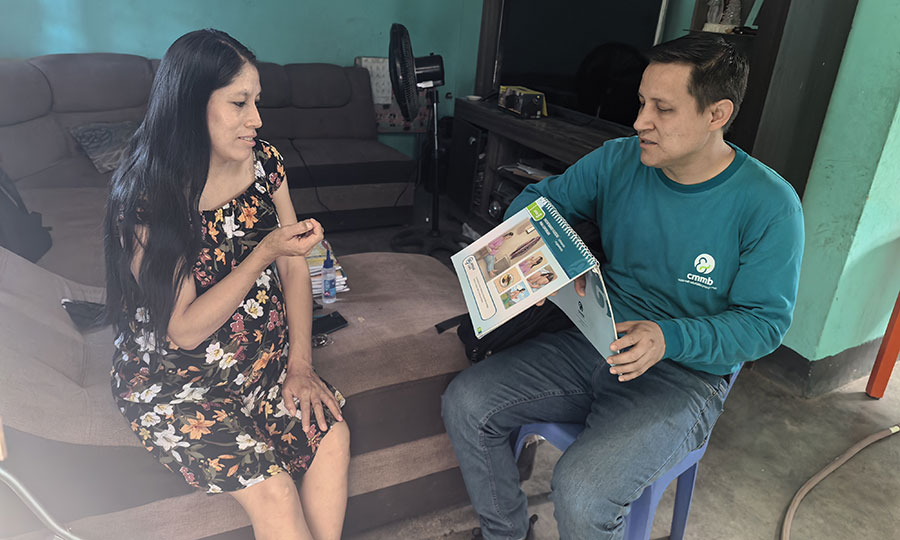
At CMMB, we know that comprehensive healthcare must address the whole person. That’s why, in Trujillo and Huancayo, Peru, we incorporate mental health services into prenatal and postpartum care. When CMMB-supported community health workers visit women at home, they assess them for anxiety and depression. We listen to their fears and emotions, identify signs of postpartum depression in mothers who have delivered, and offer them guidance on forming secure attachments with their newborns and other children.
When additional care is needed, CMMB-supported psychologists make home visits to share their expertise. We also create support groups for expectant mothers so they can build community and hear others’ experiences. Our team in Peru reaches over 2,000 pregnant women a year, improving the lives of both mothers and their children. For Eugenia, our support marked a turning point.
Help When She Needed It the Most
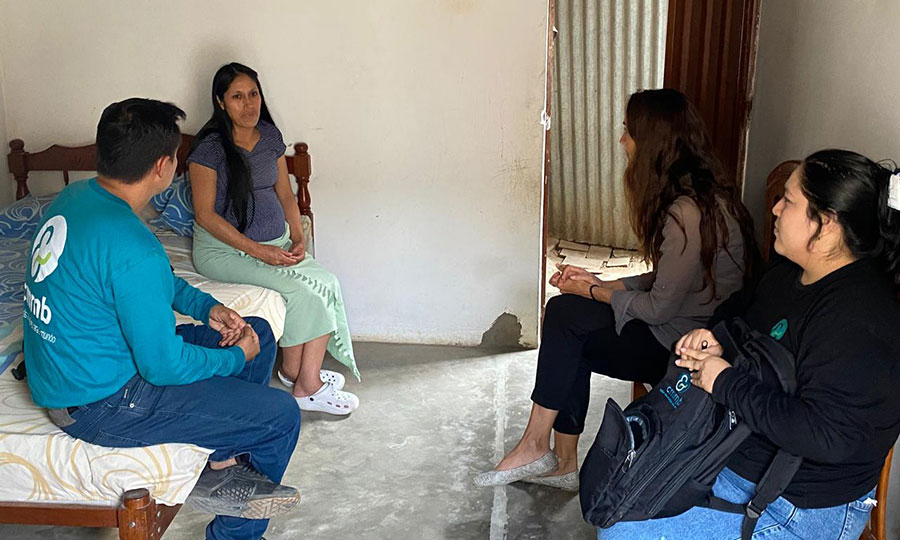
Eugenia, accompanied by CMMB Psychologist Dr. Pedro, community health worker Silvia, and a fellow staff member.
Sadness overwhelmed Eugenia, making it hard for her to work and be present for her son as her due date drew closer. But her life changed when a CMMB-supported community health worker named Silvia came to her door. In Silvia, Eugenia finally found the support she lacked.
“Silvia, more than a friend, is like a sister,” she said. “She was always helping me with her words of encouragement, guidance on my diet, and what to do in the conflictive situations I had with my partner.”
Silvia connected Eugenia with a psychologist. Together, they discussed her emotions and anxiety. The conversations helped Eugenia build her self-esteem and make conscious decisions to strengthen her family. “It helped me realize what my actions were doing to my mental health and how other people treated me,” she said.
Little by little, sadness and anxiety gave way to renewed self-confidence. “I learned to give myself my place, to think more about myself,” she said. With compassionate support by her side, Eugenia found the fortitude she thought she’d lost. “They helped me feel more confident and empowered,” Eugenia said. “They made me see everything I had achieved alone, and I felt that strength again.”
Bringing Families Out of Crisis
Today, Eugenia feels like a different person. Now a mother of two, she has repaired her bond with her older son. She is back to working as a seamstress, a vocation that adds purpose to her life and gives her hope that she can provide her children with more opportunity than she had.
Thanks to the support provided by Silvia and the CMMB team, Eugenia no longer feels like she’s fighting a silent battle alone. Focusing on her mental and emotional health improved her overall well-being. “With CMMB, I felt accompanied,” she said. “[Their support] helped me grow as a person, as a mother, and as a woman.”
Not long ago, Eugenia felt despair. Now, she believes in herself again. At CMMB, we are proud to walk with strong women like Eugenia toward happier, healthier futures.