Redefining Fatherhood through Men Taking Action Groups
In many rural communities where Access to Health Zambia, CMMB’s affiliate, works in Zambia, gender inequality remains a daily reality. Traditional norms often discourage men from taking on supportive roles at home, leaving women to shoulder most of the cooking, cleaning, and childcare. Through the GHR Foundation-supported Kusamala III project, CMMB is encouraging men to rethink what it means to be a father, promoting models of partnership that lead to healthier, happier, and more resilient families. Community-led Men Taking Action Groups are one way our advocacy is helping drive change.
For Jonas , a 47-year-old husband and father of four from Lusaka District, being a man once meant providing for his family. Nothing more, nothing less. Like many men in his community, he grew up believing that cooking, cleaning, and childcare were strictly women’s duties.
“I used to think household chores were for women only. If a man cooked or cleaned, people would laugh at him. That’s just how we were raised,” Jonas recalls.
His perspective began to change in 2023 when he joined the Men Taking Action (MTA) group under the Kusamala Project. Through open discussions and mentorship sessions, Jonas discovered that real strength lies in care, support, and shared responsibility.
“The Men Taking Action sessions helped me see that being a responsible husband and father doesn’t make you less of a man,” he says. “It builds a stronger family and earns you true respect.”
At first, adopting new roles at home was not easy. Jonas admits that stepping into tasks traditionally considered “women’s work” felt strange, and he worried about judgment from his peers. But over time, he discovered the joy and satisfaction that came from active involvement in his family’s life.
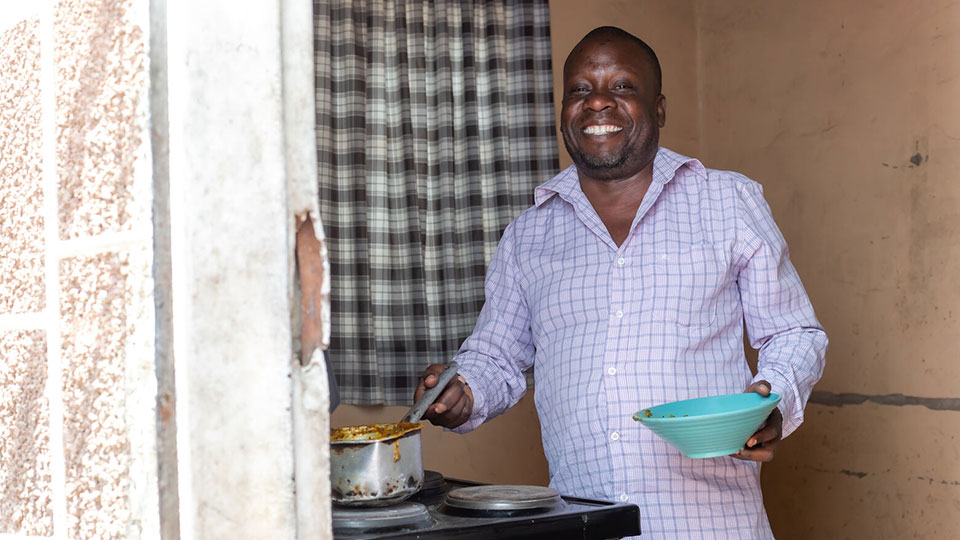
Today, Jonas takes pride in contributing at home. When his wife is at work, he cooks meals for his children, cleans, and ensures the household runs smoothly.
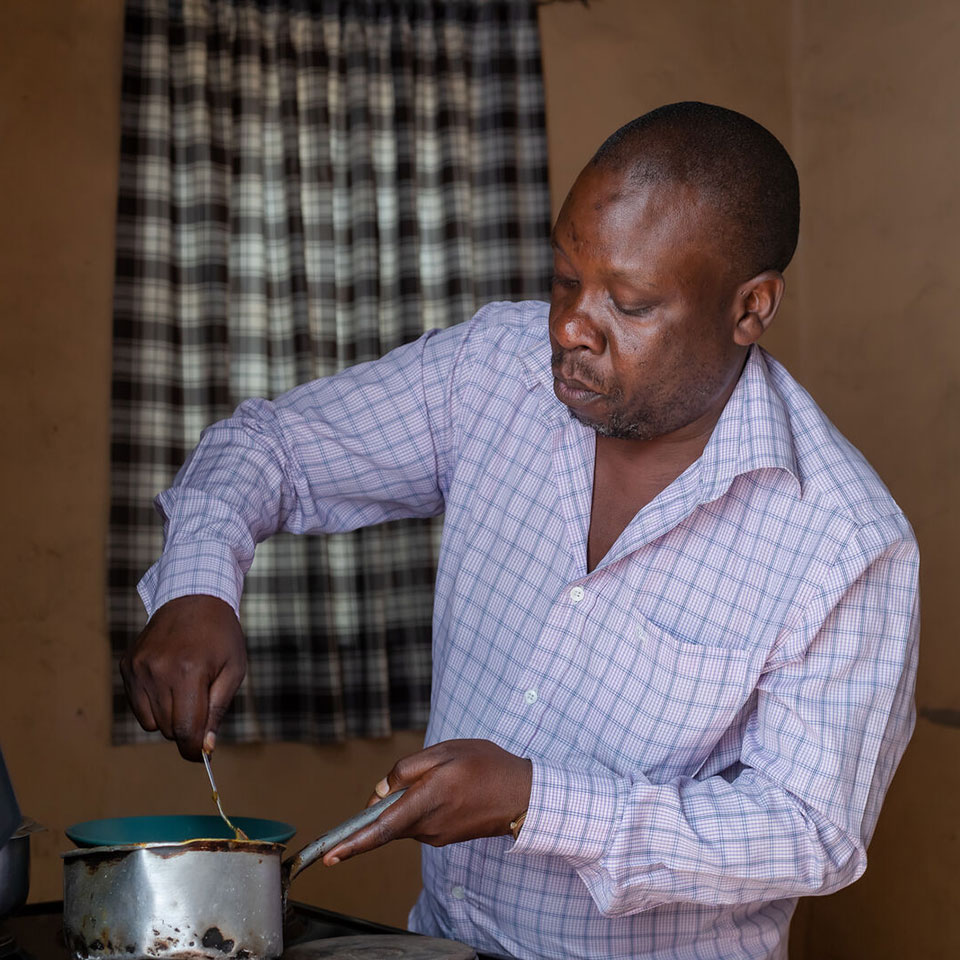
Jonas prepares a meal for his family.
“It’s something I enjoy doing. Seeing my children eat the food I have prepared gives me joy as a father,” he shares.
His understanding of partnership extends beyond household chores.
“Before joining Men Taking Action, I thought breastfeeding was only a woman’s responsibility. Now I know my role is to make sure my wife is comfortable, supported, and well rested,” he explains.
Jonas now plays an active role in all aspects of parenting, from attending clinic visits to supporting his children with schoolwork. He has also become a voice for positive change in his community, challenging harmful norms and encouraging other men to take active roles in their families.
“As an elder at my church, I mentor other men, showing them that being present, caring, and responsible does not make you weak. It makes you a better husband, a better father, and a better leader,” Jonas says.
His journey has inspired his peers and even younger men in the community. Many now see him as a role model, someone demonstrating that love, respect, and shared responsibility strengthen families and communities.
Jonas is deeply grateful to Access to Health Zambia and the Kusamala Project for empowering men like him to challenge harmful norms and lead with compassion.
“This program has changed my life and my family. I pray it continues reaching more men who still hold on to old beliefs. When men and women work together, families thrive,” he says.
Jonas’s story is one of many examples of how the Kusamala Project is creating lasting change in communities by engaging men as active partners in promoting family health, gender equality, and child well-being. Through initiatives like Men Taking Action, Access to Health Zambia continues to challenge harmful norms and build a generation of men who lead with love, respect, and responsibility.